

Our Community
Quantum Ecosystem
The group is part of a broad quantum community at MIT and beyond.
At MIT
 Department of Nuclear Science & EngineeringAdvancing the frontiers of nuclear science and engineering: preparing the next generation to develop applications of nuclear technology for the benefit of society and the environment.
 Department of PhysicsDiscoveries in physics research: from quarks to twistronics to dark matter, MIT is on the cutting edge.
 Research Laboratory of ElectronicsMIT’s leading entrepreneurial, interdisciplinary research organization, and our home laboratory.
Centers and initiatives
 Center for Ultracold AtomsAn MIT–Harvard center at the frontiers of ultracold science, from high-temperature superconductors and quantum magnetism to entanglement in few-particle systems, with applications in condensed matter physics and quantum information.
 MIT Quantum InitiativeAn MIT Presidential Initiative: an Institute-wide effort to apply quantum breakthroughs to the most consequential challenges in science, technology, industry and national security.
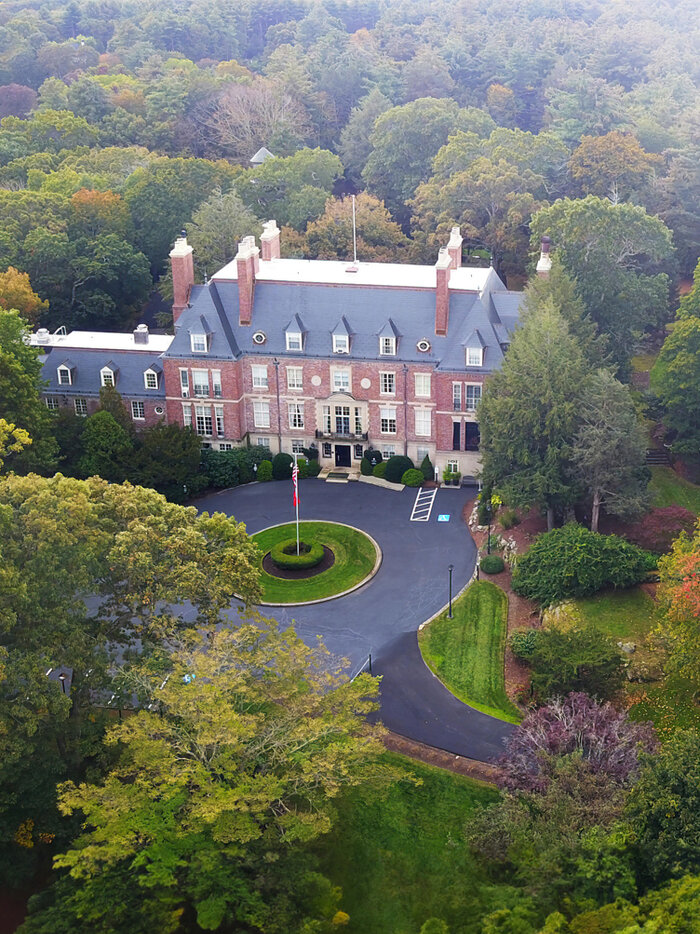 MIT NQVLOpen-Stack Rydberg Atom Quantum Computing Laboratory (ORAQL): a neutral-atom quantum computer with a shared digital twin for the community.
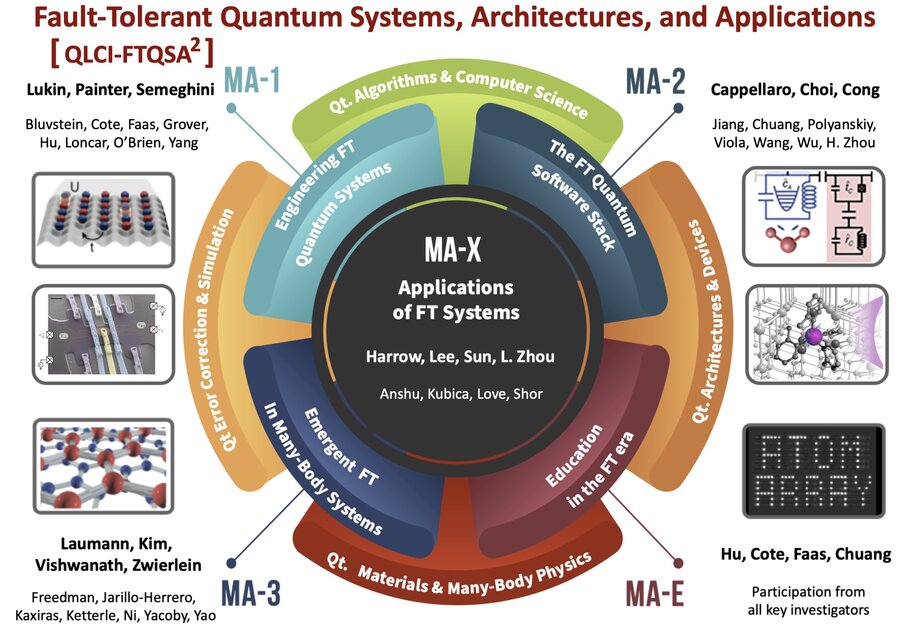 NSF Quantum Leap Challenge InstituteFTQSA²: Fault-Tolerant Quantum Systems, Architectures and Applications. Co-designs a full quantum software stack with our quantum hardware platforms and targeted applications.Page coming soon
 MIT–IBM Computing Research LabA strategic collaboration of MIT and IBM researchers pursuing joint research in AI, algorithms and quantum computing.
 iQuISEA student-led organization of graduate students and postdocs in experimental and theoretical quantum information science, computation and communication.
Join us
We welcome curious, motivated people who enjoy tackling hard problems to push the limits of quantum technology in a collaborative environment. A strong background in quantum physics or engineering and enthusiasm for discovery matter most.
I’m a prospective graduate student. How do I apply?
Applications are submitted to individual departments through a common application site. The application period is usually September 15 to December 15, for admission the following Fall. Find more information at MIT Graduate Admissions.
To which department should I apply?
Prof. Cappellaro routinely supervises students from NSE, Physics and EECS. Submit an application to the department that fits you best.
I’m a graduate student interested in an extended visit or in doing a master’s thesis with the group.
I typically do not have funding to support such visits. If you have independent funding, see the MIT page for exchange and special visiting students for the process, and the Registrar’s page on visiting students. International students should also see the International Students Office FAQ for visiting students. Please contact Pearl Nelson-Greene (pearlng-at-mit.edu).
A few things to know about MIT’s visiting student process:
- The administration needs at least 60 days to process domestic visiting students and 120 days for international visiting students. All material must be in the portal that many days before the requested start date.
- Appointments last from 3 weeks to 12 months, begin on the 1st or 15th of a month and end on the last day of a month.
- The Visiting Student Fee is $625 per month (effective Sept. 1, 2023) and includes the MIT student health insurance plan.
- International students cannot do research at MIT on a tourist visa (B1, B2 or Visa Waiver Program). Students pursuing a degree abroad must apply for the J-1 Exchange Visitor visa (Student Non-Degree category) sponsored by MIT.
- Anyone who needs a visa must show that at least 51% of their financial support comes from non-personal funds (scholarships, grants, etc.).
- Each PI can host visiting students for a maximum average of 12–24 months per fiscal year, so MIT limits the number of visiting students that I can accept.
I’m an undergraduate (not at MIT) interested in a visit or summer research.
I typically do not have funding to support such visits. If you have independent funding, see the Registrar’s page on visiting students for the process; international students should also see the International Students Office FAQ for visiting students. Please contact Pearl Nelson-Greene (pearlng-at-mit.edu). You may also be interested in the MIT Summer Research Program (MSRP).
A few things to know about MIT’s visiting student process:
- The administration needs at least 60 days to process domestic visiting students and 120 days for international visiting students. All material must be in the portal that many days before the requested start date.
- Appointments last from 3 weeks to 12 months, begin on the 1st or 15th of a month and end on the last day of a month.
- The Visiting Student Fee is $625 per month (effective Sept. 1, 2023) and includes the MIT student health insurance plan.
- International students cannot do research at MIT on a tourist visa (B1, B2 or Visa Waiver Program). Students pursuing a degree abroad must apply for the J-1 Exchange Visitor visa (Student Non-Degree category) sponsored by MIT.
- Anyone who needs a visa must show that at least 51% of their financial support comes from non-personal funds (scholarships, grants, etc.).
- Each PI can host visiting students for a maximum average of 12–24 months per fiscal year, so MIT limits the number of visiting students that I can accept.
I’m an MIT undergraduate interested in a UROP.
We sometimes post UROP projects, but most often group members are happy to include you in an active research project. Reach out to them and to Paola (pcappell-at-mit.edu).
I would like to apply for a postdoc.
Please send Paola (pcappell-at-mit.edu), with Pearl (pearlng-at-mit.edu) in cc, your CV and your potential area of research. Funding and projects are always in flux, so it is difficult to predict openings. You may also want to apply to one of the many postdoctoral fellowships at MIT.

Quantum Engineering Group
Research Laboratory of Electronics
77 Massachusetts Avenue, Cambridge, MA 02139